


Early Signs of Heart Problems You Should Never Ignore

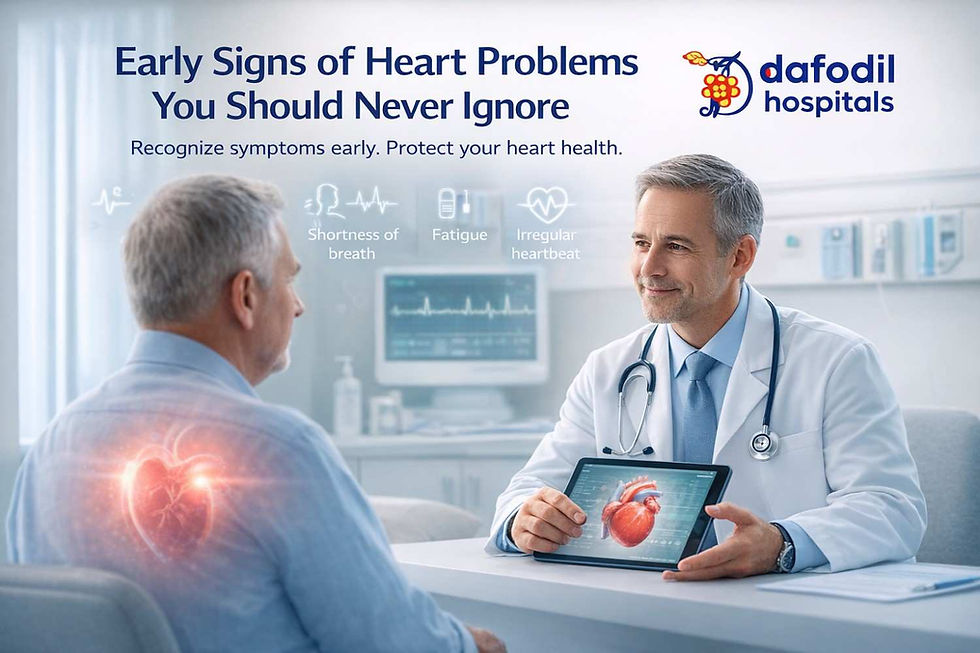
Heart health plays a vital role in overall well-being. Many serious heart conditions develop gradually, often showing early warning signs that are easy to overlook or dismiss as stress, fatigue, or minor discomfort. Recognizing these symptoms early and seeking timely medical attention can help prevent complications and improve outcomes.
In this article, we discuss some common early signs of heart problems and when it is important to consult a healthcare professional.
Why Paying Attention to Early Symptoms Matters
Heart diseases remain one of the leading causes of health complications worldwide. The good news is that early detection and proper medical care can significantly reduce risks.
Ignoring symptoms may delay diagnosis, making treatment more complex later. Being aware of your body’s signals is the first step toward protecting your heart health.
Common Early Signs of Heart Problems
1. Chest Discomfort or Pain
Chest pain or discomfort is one of the most recognized symptoms of heart issues. It may feel like pressure, tightness, heaviness, or burning in the chest.
Some people experience mild discomfort rather than sharp pain - which is why it is sometimes ignored. If chest discomfort occurs frequently or during physical activity, medical evaluation is essential.
2. Shortness of Breath
Feeling breathless during simple activities like walking, climbing stairs, or even resting can be a warning sign.
Shortness of breath may indicate that the heart is not pumping blood efficiently, affecting oxygen supply to the body.
3. Unusual Fatigue
Persistent tiredness without clear reason, especially after minimal effort, may be linked to heart health concerns.
If you notice sudden or extreme fatigue that interferes with daily activities, it should not be ignored.
4. Pain in Other Areas of the Body
Heart-related discomfort does not always stay in the chest. Some individuals may feel pain or discomfort in:
Arms (especially the left arm)
Neck
Jaw
Back
Shoulders
These symptoms can appear gradually and may come and go.
5. Dizziness or Lightheadedness
Frequent dizziness, fainting spells, or feeling unsteady can occur when the heart struggles to maintain proper blood flow to the brain.
6. Irregular Heartbeat or Palpitations
Occasional skipped beats can be normal, but frequent or prolonged palpitations may signal an underlying heart condition that requires medical assessment.
When Should You See a Doctor?
You should seek medical advice if you experience:
Repeated chest discomfort
Breathing difficulty
Sudden fatigue
Dizziness or fainting
Persistent heart palpitations
Early consultation allows doctors to perform necessary tests and guide proper treatment or lifestyle changes.
How Regular Checkups Help Protect Your Heart
Routine health screenings can identify risk factors such as high blood pressure, cholesterol levels, and blood sugar early — even before symptoms appear. Preventive care is one of the most effective ways to maintain long-term heart health.
Take the First Step Toward a Healthier Heart
If you or a loved one experienced any of these symptoms, do not delay seeking professional medical advice.
Book an appointment with a qualified doctor today to assess your heart health and receive proper guidance. Early care can make a life-changing difference.
Medical Disclaimer
The information provided in this article is for general educational purposes only and should not be considered medical advice, diagnosis, or treatment. Symptoms may vary from person to person. Always consult a qualified healthcare professional for accurate evaluation and personalized medical care.
Frequently Asked Questions About Early Heart Problem Symptoms
🔽 What are the earliest warning signs of heart problems?
Early signs may include chest discomfort, shortness of breath, unusual fatigue, dizziness, irregular heartbeat, and pain in arms, neck, or jaw.
🔽 Can heart problems occur without severe chest pain?
Yes. Some people experience mild pressure, breathlessness, fatigue, or body discomfort instead of intense chest pain.
🔽 When should I consult a doctor for heart-related symptoms?
You should seek medical advice if symptoms occur frequently, worsen over time, or interfere with daily activities.
🔽 Are regular heart checkups necessary even without symptoms?
Yes. Regular screenings help detect risk factors early and prevent serious heart conditions before symptoms appear.
🔽 Can lifestyle changes help improve heart health?
Healthy eating, regular exercise, stress management, and medical guidance can significantly support heart health.


Comments