


Understanding Blood Pressure: When Should You See a Doctor?
Have you ever been told, “Your blood pressure is slightly high” — and then ignored it because you felt completely fine?
You’re not alone.
Blood pressure often changes silently, without obvious symptoms. Many people only become aware of it during a routine checkup or when a doctor raises concern. The challenge is knowing when it’s just a temporary fluctuation — and when it needs medical attention.
Let’s break it down in a simple, practical way.
What Exactly Is Blood Pressure?
Blood pressure is the force with which your blood flows through your arteries. It is measured using two numbers:
Systolic pressure (upper number): pressure when the heart beats
Diastolic pressure (lower number): pressure when the heart rests
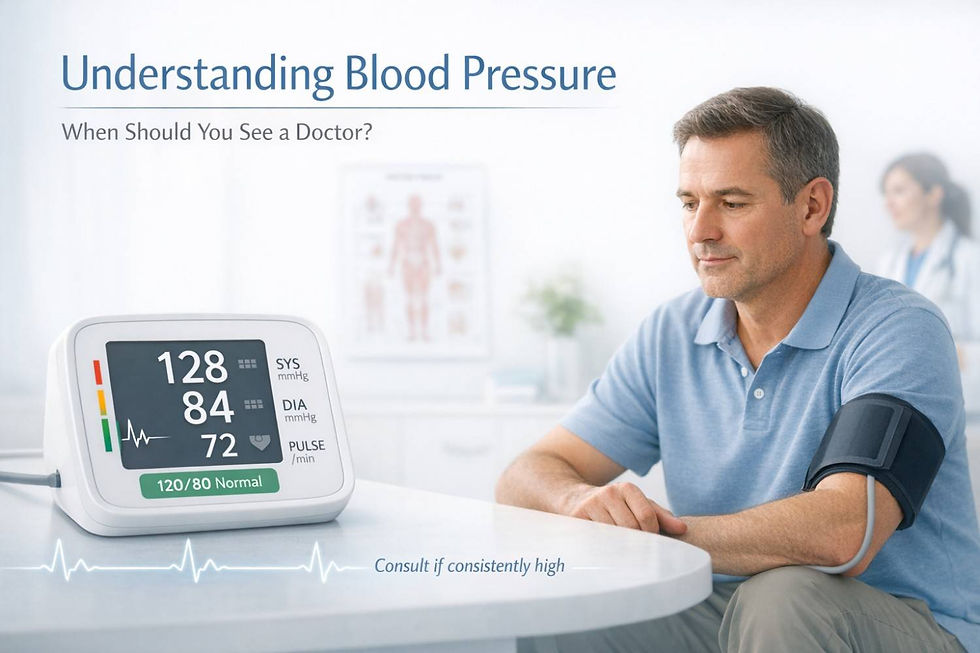
A normal reading is usually around 120/80 mmHg, but it can vary slightly depending on age, activity, and overall health,regular health checkups must be compulsory in that case.
Why Blood Pressure Often Goes Unnoticed
Here’s the surprising part:
👉 Many people with high blood pressure feel completely normal.
There may be no pain, no discomfort, and no visible signs — which is why it is often called a “silent condition.”
However, over time, unmanaged blood pressure can affect important organs like the heart, brain, and kidneys. That’s why awareness and timely medical guidance are important.
When Should You Actually See a Doctor?
This is the question most people have — and the answer depends on patterns, not just a single reading.
1. If Your Readings Are Consistently High
If your blood pressure readings remain above normal over multiple checks (for example, 130/80 or higher), it is advisable to consult a doctor.
A single high reading may happen due to stress, lack of sleep, or physical activity — but consistent readings need evaluation.
2. If You Experience Symptoms Along with High BP
Although symptoms are not always present, some people may notice:
Frequent headaches
Dizziness or lightheadedness
Shortness of breath
Unusual fatigue
If these occur along with high readings, it’s important to seek medical advice rather than self-managing.
3. If You Have Risk Factors
You should be more proactive about monitoring and consulting a doctor if you have:
Diabetes
Family history of hypertension
Sedentary lifestyle
High stress levels
Obesity or unhealthy diet
Even without symptoms, regular checkups can help detect changes early.
4. If You Are Above 40 or Under High Stress
Blood pressure changes become more common with age and lifestyle factors.
If you are above 40 or have a high-pressure routine (long working hours, irregular sleep, stress), periodic health screening is recommended.
5. If You Are Already on Medication
If you are taking medication for blood pressure:
Do not stop or adjust it without medical advice
Consult your doctor if readings fluctuate
Regular follow-up ensures safe and effective management
A Simple Reality Check
Ask yourself:
When was the last time you checked your blood pressure?
Do you know your usual range?
Have you ignored a slightly high reading before?
If you’re unsure about any of these, it might be a good time to get it checked.
How Regular Checkups Make a Difference
Regular monitoring helps:
✔ Identify changes early
✔ Prevent complications
✔ Guide lifestyle adjustments
✔ Support long-term health
Even a quick consultation can provide clarity and peace of mind.
Take Control of Your Heart Health
Your health doesn’t always give loud warnings — sometimes it whispers.
If you’ve noticed changes in your blood pressure or haven’t checked it recently, consider speaking with a qualified healthcare professional.
📞 Book a consultation today with heart care specialist.
Quick Summary: When to See a Doctor for Blood Pressure
Consistent readings above 130/80 mmHg
Presence of symptoms like dizziness or headaches
Existing conditions like diabetes
Family history of hypertension
Irregular or fluctuating readings
👉 Early consultation helps prevent complications and supports better long-term health.
Medical Disclaimer
This article is for general informational purposes only and should not be considered medical advice, diagnosis, or treatment. Blood pressure levels and health conditions vary for each individual. Always consult a qualified healthcare professional for proper evaluation and care.



Comments